-seo-36261.jpg)
Learn the latest SEO best practices to improve your website's search engine rankings.
SEO is the practice of making your site easy to find, easy to understand, and genuinely useful for the query. In 2026-style search (classic + AI-driven), the pages that win are the ones that satisfy intent quickly, demonstrate credibility, and connect topics clearly through internal links.
1) Nail the technical basics. Ensure pages are indexable, canonical URLs are correct, and you avoid duplicate content. Fix broken links, reduce redirects, and make sure your sitemap reflects real, valuable pages.
2) Build content around intent. Write to answer real questions completely. Thin content rarely ranks long-term because it does not solve the problem. For a deeper implementation plan, see the SEO optimization guide.
3) Improve speed and UX. Performance impacts rankings and conversions. If your pages feel slow or inconsistent, improve the foundation with web development services and readability with UI/UX design.
4) Strengthen internal linking. Use descriptive anchors that explain the relationship between pages. For example, marketing pages should naturally connect to digital marketing strategies and social media marketing when relevant.
5) Build trust signals. Add clear business details, transparent processes, and proof (work samples, testimonials, case studies). Trust improves conversion and supports E-E-A-T signals.
6) Measure and iterate. Use Search Console to find queries where you rank on page 2/3 and expand those pages with missing sections, better examples, and clearer answers.
If you want hands-on execution across technical SEO, content, and internal linking, explore advanced SEO services.
About Priya Sharma
Expert at IT Guru Solutions
Read Next
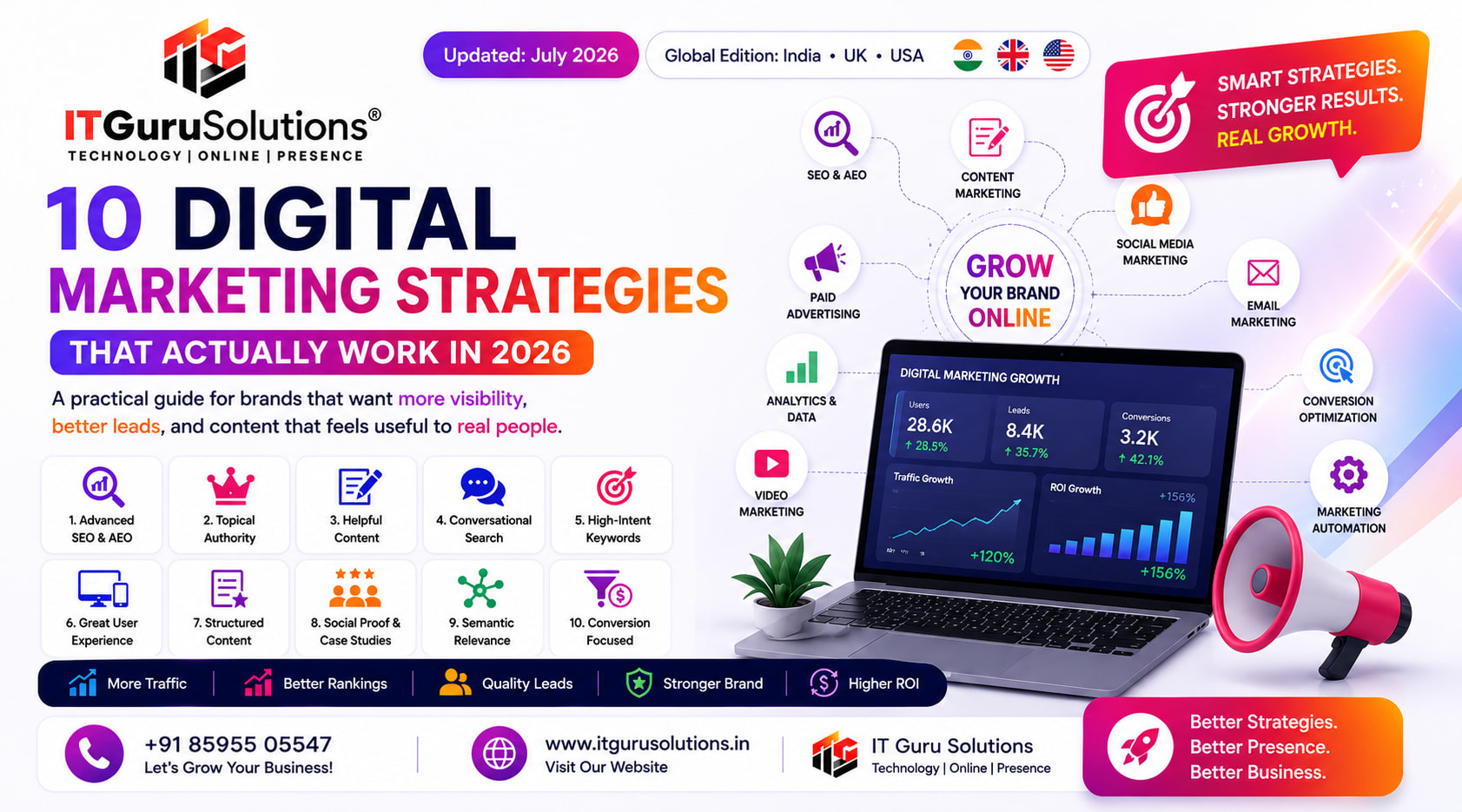
10 Digital Marketing Strategies That Actually Work in 2026
A practical, human-first guide to the top digital marketing strategies in 2026. Covers SEO, AI search optimization, E-E-A-T, topical authority, semantic SEO, lo
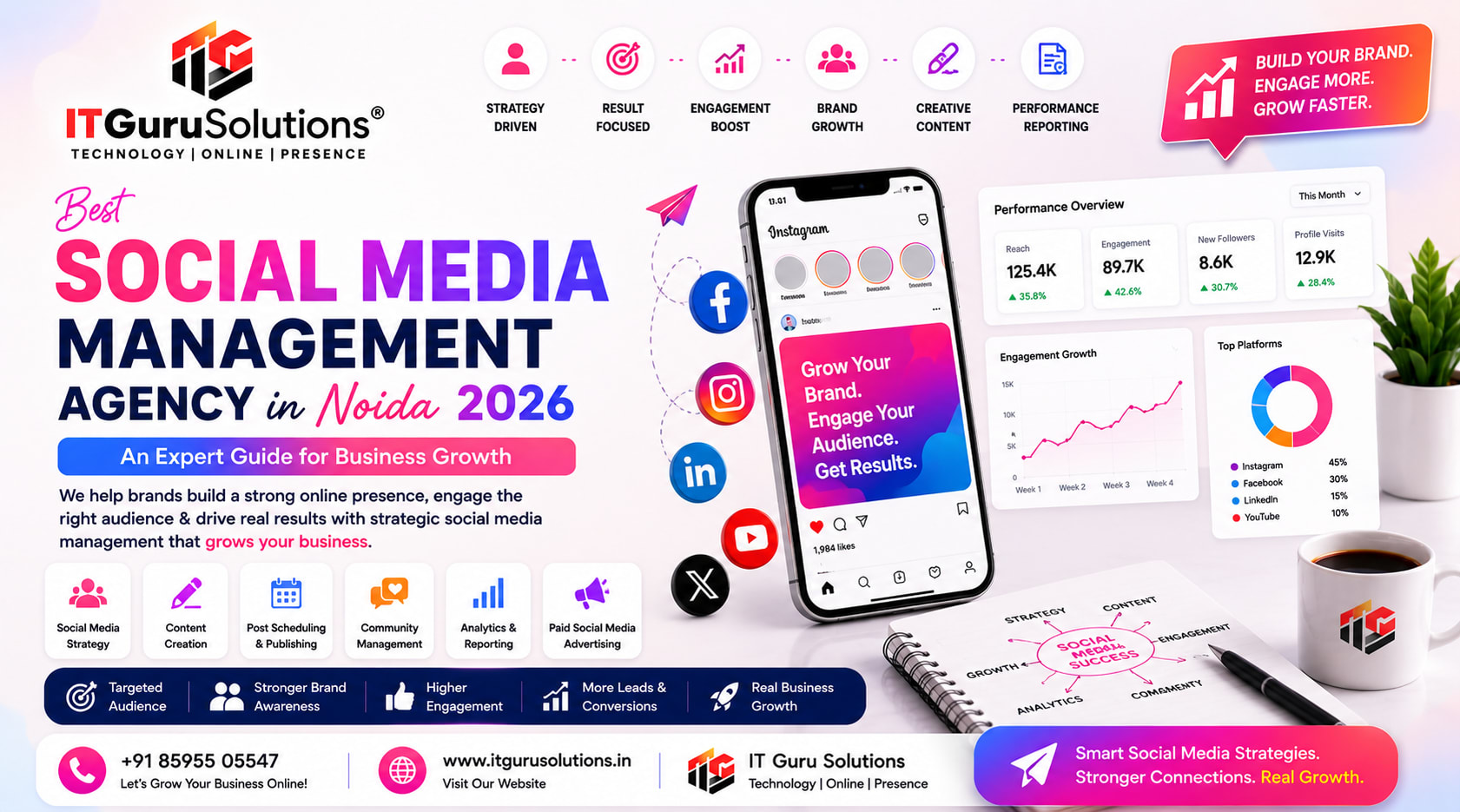
Best Social Media Management Agency in Noida 2026
Expert guide to choosing the best Social Media Management Agency in Noida with pricing, services, strategy, and growth insights for 2026.
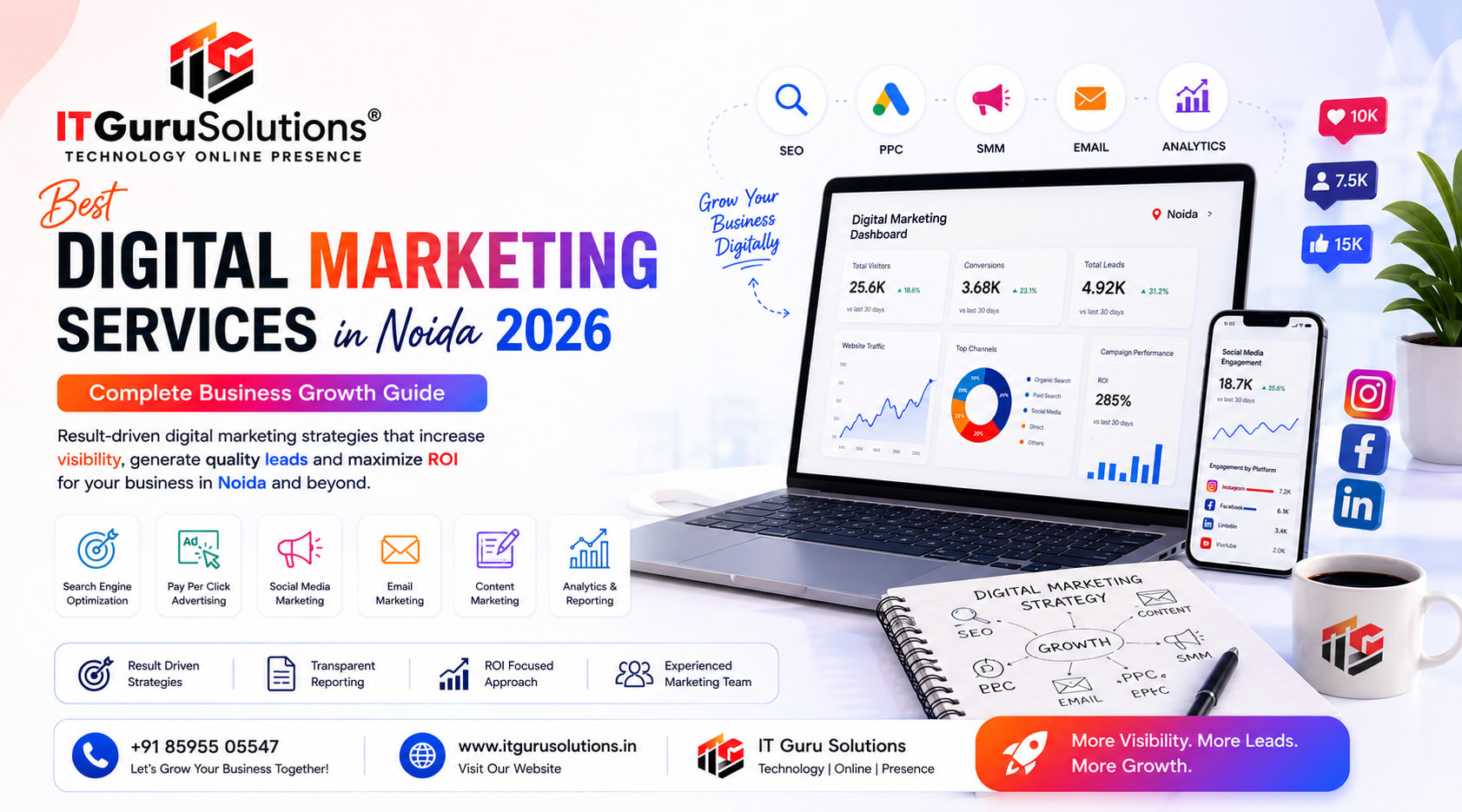
Best Digital Marketing Services in Noida 2026 | Top Digital Marketing Company
Professional Digital Marketing Services in Noida helping businesses improve SEO, leads, social media growth, PPC performance, and online visibility.
Continue Reading
View allReady to implement these strategies?
Our team at IT Guru Solutions can help you achieve your goals with expert guidance.