
Learn how small businesses can leverage digital marketing to grow their customer base.
Digital marketing works best when it is built like a system: clear positioning, a few reliable channels, and consistent measurement. Small businesses do not need every tactic - they need a plan that matches budget, timeline, and customer intent.
Start with the offer and the audience. Before ads or content, define who you help, what problem you solve, and what outcome you deliver. Then make sure your site communicates that in seconds. If your pages feel confusing or slow, improve clarity with UI/UX design and performance with web development.
1) SEO for compounding growth. SEO is often the highest-ROI long-term channel because strong pages keep working. Focus on service pages, local intent, and content that answers real questions. A practical reference is SEO best practices, and if you want implementation support, explore advanced SEO services.
2) Content that sells without sounding salesy. Publish content that helps buyers make a decision: comparisons, checklists, pricing guidance, and examples. Strong content pairs well with content writing services when you need a consistent pipeline.
3) Social media that drives clicks (not just likes). Social is powerful when each post has a purpose: trust-building, education, or a clear next step. For tactical guidance, see social media marketing tactics.
4) Paid ads with tight targeting and landing pages. Paid works when landing pages match the promise and track conversions. Avoid sending traffic to a generic homepage; build a page for one offer and one intent.
5) Measurement and iteration. Track leads, calls, form starts, and qualified enquiries. Then double down on what produces customers - not just traffic.
Simple weekly routine:
- Improve one core page (service page or landing page) for clarity and conversion.
- Publish one helpful content piece linked to that service.
- Repurpose into social posts and track clicks + enquiries.
If you want a coordinated plan across SEO, content, and social, explore digital marketing services and social media handling.
About Priya Sharma
Expert at IT Guru Solutions
Read Next
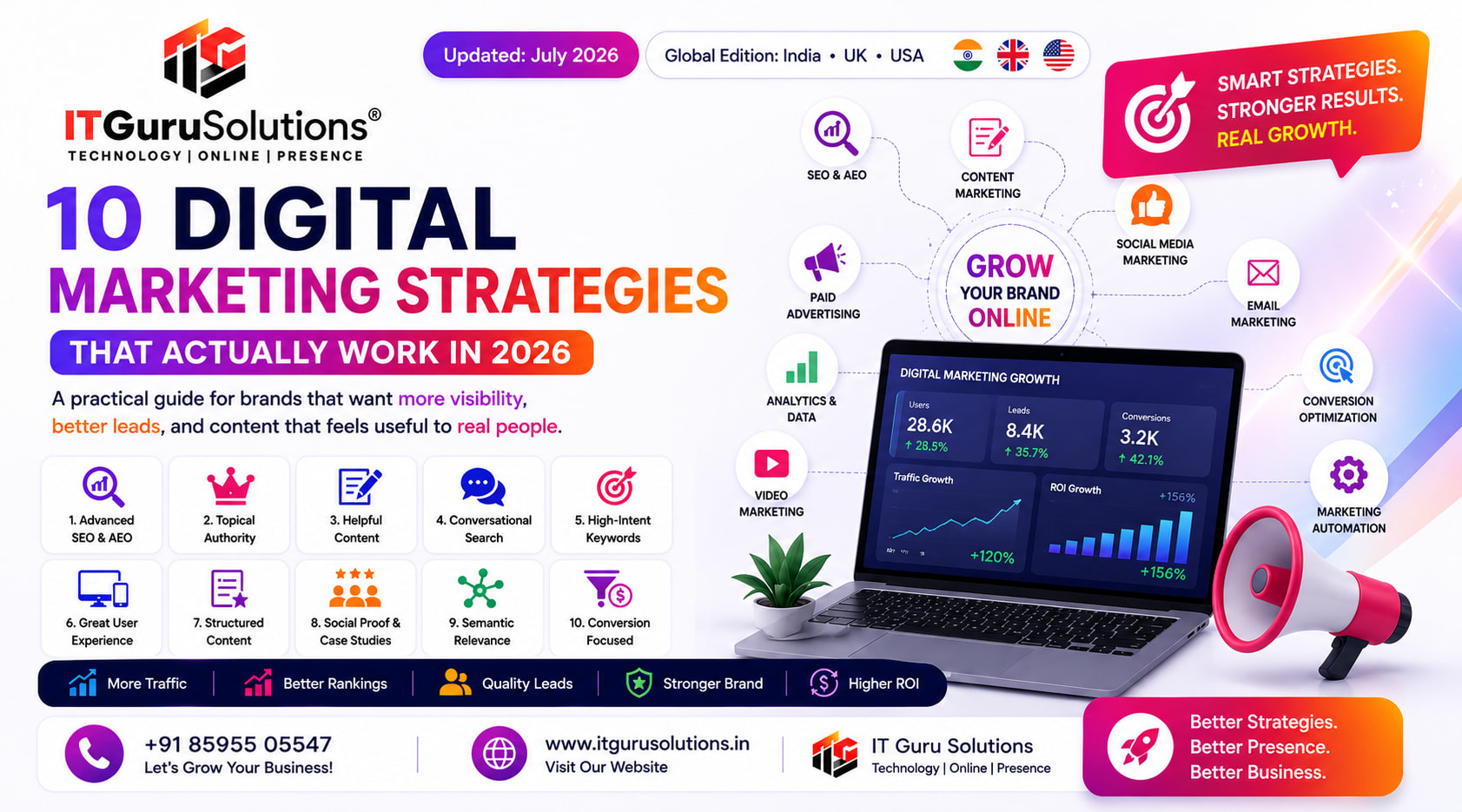
10 Digital Marketing Strategies That Actually Work in 2026
A practical, human-first guide to the top digital marketing strategies in 2026. Covers SEO, AI search optimization, E-E-A-T, topical authority, semantic SEO, lo
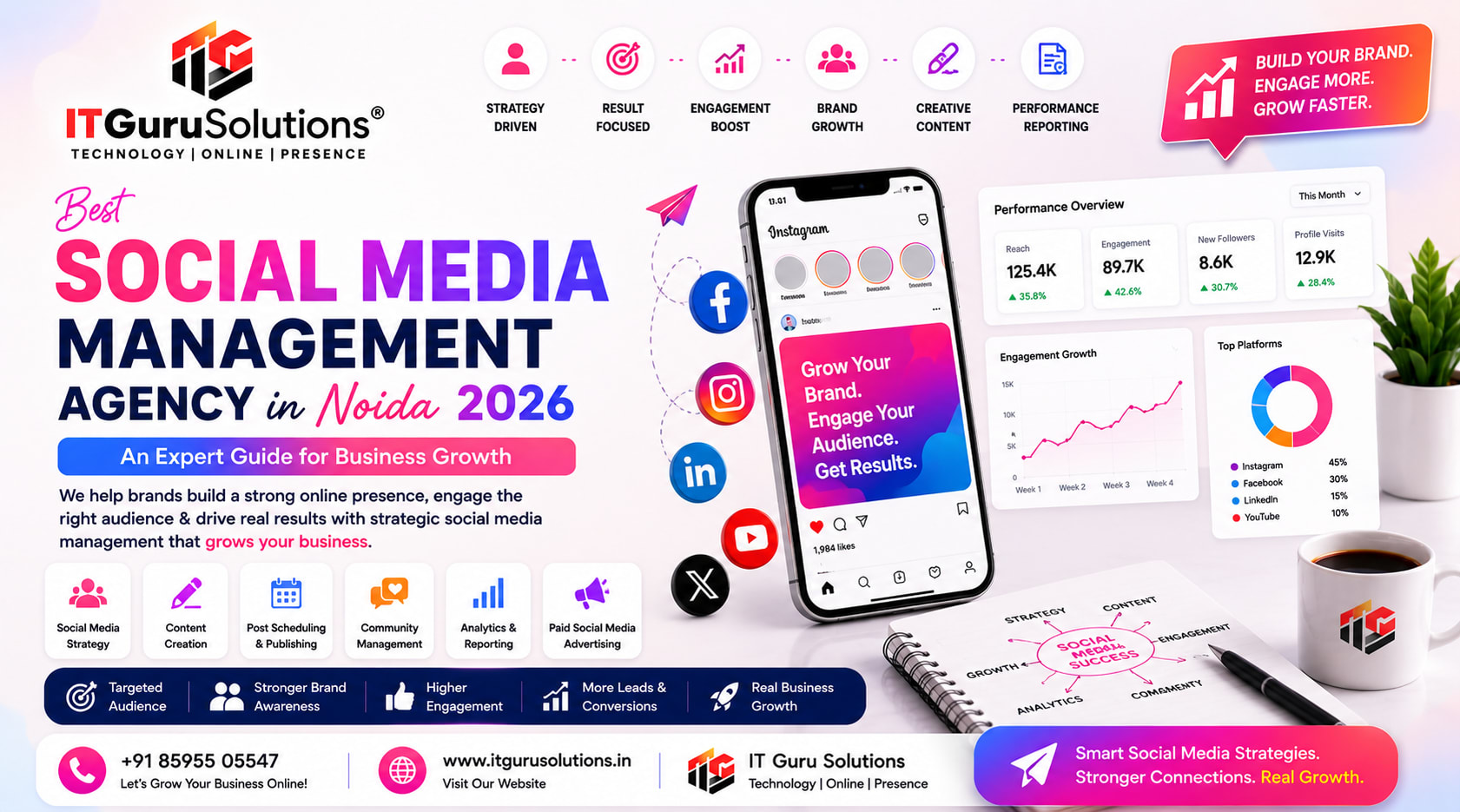
Best Social Media Management Agency in Noida 2026
Expert guide to choosing the best Social Media Management Agency in Noida with pricing, services, strategy, and growth insights for 2026.
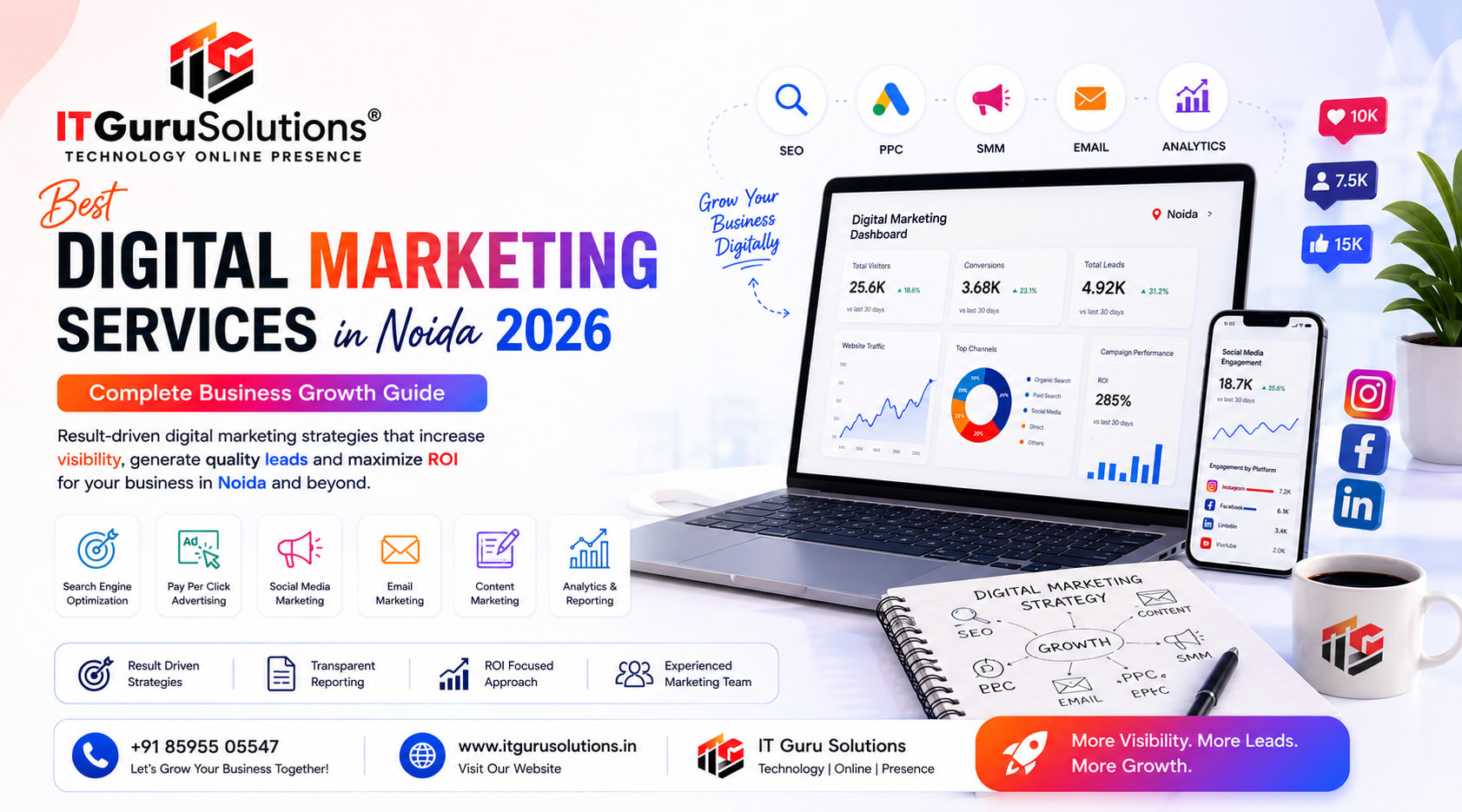
Best Digital Marketing Services in Noida 2026 | Top Digital Marketing Company
Professional Digital Marketing Services in Noida helping businesses improve SEO, leads, social media growth, PPC performance, and online visibility.
Continue Reading
View allReady to implement these strategies?
Our team at IT Guru Solutions can help you achieve your goals with expert guidance.