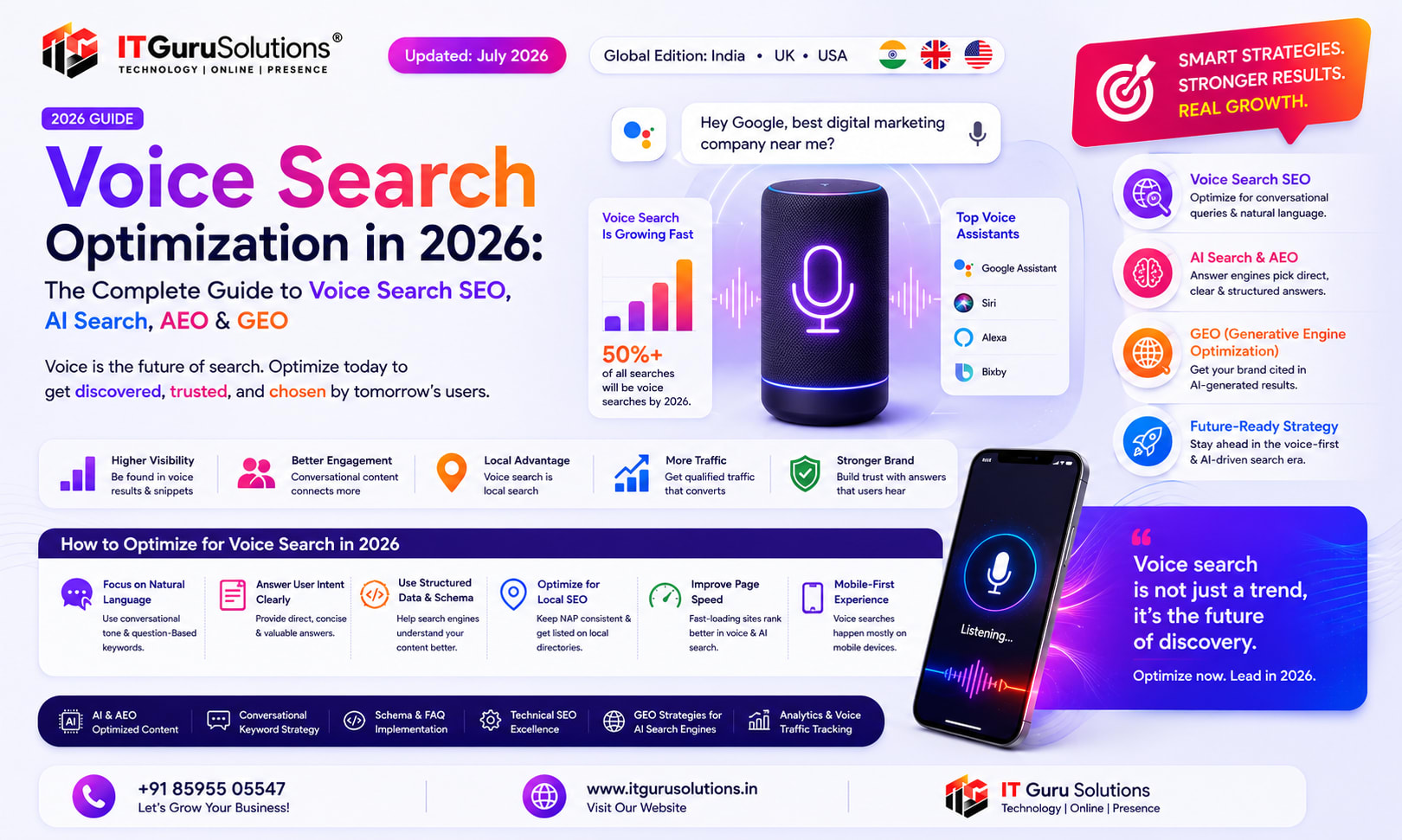
Voice search optimization in 2026 requires conversational keyword targeting, structured FAQ content, speakable schema markup, and fast loading mobile pages. Focus on natural language queries, local search intent, and featured snippet positioning to capture voice assistant results from Google Assistant, Siri, Alexa, and AI powered search platforms.
Voice search is transforming how people discover businesses, products, and information online. Instead of typing short keywords, users now ask complete questions through Google Assistant, Siri, Alexa, Gemini, and other AI-powered assistants. This shift has changed how search engines interpret intent and how businesses need to optimize their websites to remain visible.
Voice Search Optimization is no longer limited to smart speakers. It now plays an important role in AI-powered search experiences, Google AI Overviews, conversational search, and answer engines that deliver direct responses instead of traditional search results. Businesses that create helpful, well-structured content are better positioned to appear in these emerging search experiences.
Effective Voice Search Optimization combines technical SEO, conversational content, semantic SEO, structured data, local SEO, and user-focused content. Rather than focusing only on keywords, modern optimization helps search engines understand topics, entities, relationships, and user intent to provide accurate answers across multiple platforms.
Whether you run a local business, eCommerce store, SaaS company, startup, or enterprise website, understanding how voice search works can help improve visibility, attract qualified traffic, and build long-term authority.
Businesses looking to strengthen their overall online visibility should build a solid SEO foundation before optimizing for voice search. Explore our Professional SEO Services to improve technical performance, content quality, and search visibility across traditional and AI-powered search experiences.
Table of Contents
- Quick Insights
- Who This Guide Is For
- What Is Voice Search Optimization?
- Why Voice Search Matters in 2026
- How Voice Search Works
- Voice Search vs Traditional Search
- Benefits of Voice Search Optimization
- Key Voice Search Ranking Factors
Quick Insights
| Category | Details |
|---|---|
| Primary Topic | Voice Search Optimization |
| Best For | Local Businesses, Startups, SMEs, eCommerce Stores, SaaS Companies, Enterprises, Healthcare, Education, Hospitality, and Service Providers |
| Search Platforms | Google Search, Google Assistant, Siri, Alexa, Gemini, ChatGPT, AI Search Engines, Perplexity, Microsoft Copilot |
| Core SEO Focus | Voice Search SEO, AI Search Optimization, AEO, GEO, Semantic SEO, Entity SEO, Local SEO, Structured Data |
| Primary Goal | Improve visibility for conversational searches, featured snippets, AI-generated answers, and voice assistants. |
| Key Optimization Areas | Question-based content, mobile experience, page speed, schema markup, topical authority, local business optimization, and helpful content. |
Who This Guide Is For
This guide is designed for businesses, marketers, website owners, and SEO professionals who want to prepare their websites for the future of search. As search continues evolving beyond traditional keyword-based queries, organizations need content that answers real questions naturally and accurately.
- Business owners looking to improve online visibility.
- Digital marketers developing long-term SEO strategies.
- Local businesses targeting nearby customers through voice search.
- eCommerce websites optimizing product discovery.
- Content creators publishing helpful, conversational content.
- SEO professionals implementing AEO, GEO, and Semantic SEO.
- Website owners preparing for Google AI Overviews and AI-powered search.
- Organizations focused on improving customer experience through better search visibility.
For businesses beginning their digital growth journey, building a technically sound and search-friendly website is essential. Learn more about IT Guru Solutions and how our digital services help businesses create sustainable online growth through SEO, web development, content strategy, and digital marketing.
What Is Voice Search Optimization?
Voice Search Optimization is the process of improving your website so it can provide accurate, relevant, and conversational answers to users who search using voice-enabled devices and AI assistants. Instead of focusing only on traditional keyword rankings, voice search optimization helps search engines understand user intent, context, and natural language to deliver the best possible answer.
Today, people use voice commands to search for local businesses, compare products, ask questions, find directions, and solve everyday problems. Queries such as "Where is the best digital marketing agency near me?" or "How do I improve my website's SEO?" are now common across smartphones, smart speakers, and AI-powered search platforms.
Unlike traditional SEO, which often targets short keywords, voice search focuses on conversational phrases, question-based content, semantic relationships, and structured information. Search engines use artificial intelligence, natural language processing (NLP), and machine learning to understand what users actually mean rather than simply matching keywords.
Modern voice search optimization also supports emerging search experiences such as Google AI Overviews, AI-powered assistants, and answer engines that generate direct responses from trusted, well-structured content.
Why Voice Search Matters in 2026
Search behavior has evolved significantly over the past few years. Users now expect immediate, accurate, and conversational answers regardless of whether they are searching on a smartphone, laptop, smart speaker, or AI assistant. This shift has made voice search an important part of a modern SEO strategy.
People naturally speak differently than they type. While someone may type "SEO company Delhi", they are more likely to ask, "Which SEO company in Delhi can help improve my website rankings?" Search engines are increasingly designed to understand these natural conversations and return the most helpful response.
Businesses that create clear, informative, and well-structured content have a greater opportunity to appear in featured snippets, AI-generated summaries, local search results, and conversational search experiences.
Voice search is no longer just about smart speakers. It influences how content is discovered across Google Search, Google Assistant, Gemini, Siri, Alexa, Microsoft Copilot, ChatGPT, and other AI-powered search platforms.
| Traditional SEO | Voice Search Optimization |
|---|---|
| Focuses primarily on typed keywords. | Optimizes for natural conversations and complete questions. |
| Ranks webpages. | Delivers direct answers through AI assistants and voice-enabled devices. |
| Keyword relevance plays a major role. | User intent, context, entities, and semantic understanding are equally important. |
| Users browse multiple search results. | Users often receive a single spoken or AI-generated answer. |
How Voice Search Works
Voice search combines several advanced technologies to understand spoken language and deliver relevant answers within seconds. While the experience feels simple for users, multiple processes work together behind the scenes.
1. Speech Recognition
When a user speaks into a device, automatic speech recognition (ASR) converts spoken words into text. Modern AI systems are trained to recognize different accents, pronunciations, and speaking patterns with increasing accuracy.
2. Natural Language Processing (NLP)
After converting speech into text, search engines analyze the meaning behind the query using natural language processing. Instead of matching exact keywords, NLP evaluates context, relationships between words, and user intent.
3. Search Intent Analysis
The search engine determines whether the user wants information, directions, a nearby business, product recommendations, or another type of result. Understanding intent helps deliver more useful responses.
4. Content Evaluation
Search engines analyze indexed webpages, structured data, authority signals, page experience, and topical relevance to identify the most trustworthy answer for the query.
5. AI-Generated Response
Depending on the platform, users may receive a featured snippet, a Google AI Overview, a local business recommendation, or a conversational response generated from authoritative sources.
Building this level of visibility requires a strong technical foundation, high-quality content, and ongoing optimization. Our SEO Services help businesses improve website performance, content quality, and search visibility across both traditional and AI-powered search experiences.
Voice Search vs Traditional Search
Although both methods help users find information online, the way people interact with voice search is significantly different from traditional text-based searches. Understanding these differences allows businesses to create content that aligns with modern search behavior.
| Voice Search | Traditional Search |
|---|---|
| Uses natural, conversational language. | Often uses short keyword phrases. |
| Typically asks complete questions. | Focuses on brief search terms. |
| Frequently returns direct answers. | Displays multiple search results for comparison. |
| Strong emphasis on local intent and immediate actions. | Broader mix of informational, navigational, and transactional searches. |
| Optimized through semantic understanding, structured data, and helpful content. | Optimized through traditional SEO factors alongside content relevance. |
As AI continues to reshape search experiences, businesses should view voice search optimization as an extension of comprehensive SEO rather than a separate strategy. Creating helpful content, improving technical performance, and understanding user intent remain the foundation of long-term search visibility.
Voice Search Optimization Strategies That Work in 2026
Successfully optimizing for voice search requires more than adding question-based keywords to your content. Search engines and AI-powered assistants evaluate content quality, user intent, technical performance, topical authority, and structured data before selecting responses for voice queries or AI-generated answers.
A successful voice search strategy combines traditional SEO best practices with conversational content, semantic optimization, and a strong user experience. Rather than treating voice search as a separate marketing tactic, businesses should integrate it into their overall SEO and content strategy.
1. Understand Conversational Search Intent
People speak naturally when using voice assistants. Instead of entering short search phrases, they ask complete questions that reflect their needs, preferences, or immediate goals.
For example, a user may type "SEO agency Delhi" into a search engine but ask, "Which SEO agency in Delhi can help improve my website rankings?" through a voice assistant.
Understanding these conversational patterns allows businesses to create content that directly answers real user questions instead of focusing only on exact-match keywords.
| Typed Search | Voice Search |
|---|---|
| Best SEO company | Which SEO company is best for small businesses? |
| Website speed | How can I make my website load faster? |
| Local restaurant | Where is the best family restaurant near me? |
| Digital marketing | How does digital marketing help my business grow? |
2. Focus on Answering Questions Clearly
Voice assistants and AI search engines are designed to provide immediate answers. Pages that explain a topic clearly, answer common questions, and use logical heading structures are more likely to be selected for featured snippets and AI-generated responses.
Instead of lengthy introductions, answer the primary question within the first few sentences of each section before expanding with supporting information, examples, and practical advice.
This structure improves readability for users while helping search engines identify the most relevant answer.
3. Optimize for Featured Snippets
Featured snippets remain one of the most valuable opportunities for voice search visibility because many AI assistants use them when responding to spoken queries.
Although there is no guaranteed method to earn a featured snippet, businesses can improve their chances by publishing well-structured content that directly answers common questions.
- Use descriptive H2 and H3 headings.
- Answer questions immediately below each heading.
- Include numbered steps where appropriate.
- Use comparison tables for complex topics.
- Create concise definitions for important concepts.
- Support explanations with examples and practical insights.
4. Create Content for Google AI Overviews
Google AI Overviews summarize information from multiple authoritative sources to answer user queries directly within search results. Rather than relying solely on keyword density, AI systems evaluate content quality, expertise, trustworthiness, topical relevance, and overall usefulness.
Businesses should focus on creating comprehensive resources that explain topics in depth, answer related questions, and demonstrate real expertise instead of publishing thin or repetitive content.
Well-organized pages that include definitions, comparisons, examples, tables, and FAQs are generally easier for AI systems to interpret and summarize.
5. Strengthen Answer Engine Optimization (AEO)
Answer Engine Optimization (AEO) focuses on helping AI assistants and search engines deliver accurate answers directly from your content. Instead of optimizing only for webpage rankings, AEO prioritizes creating content that satisfies specific user questions quickly and clearly.
Effective AEO involves:
- Providing concise answers near the beginning of each section.
- Using descriptive headings that match user intent.
- Organizing content with logical hierarchy.
- Supporting answers with additional context and examples.
- Including structured data where appropriate.
- Maintaining factual, trustworthy, and up-to-date information.
Businesses investing in long-term organic growth often combine voice search optimization with comprehensive SEO Services to improve technical performance, content quality, and visibility across both traditional search results and AI-powered search experiences.
6. Publish Comprehensive Topic Clusters
Search engines increasingly evaluate websites based on topical authority rather than individual keywords. Instead of creating isolated articles, develop a connected group of content that covers a subject from multiple perspectives.
For example, a pillar page on Voice Search Optimization can naturally connect to supporting content covering technical SEO, schema markup, local SEO, Google Business Profile optimization, Core Web Vitals, AI Overviews, and content strategy.
This approach helps search engines understand the relationships between topics while making it easier for users to explore related information through natural internal links.
7. Implement Semantic SEO and Entity SEO
Modern search engines no longer rely solely on matching keywords. They use semantic understanding and entity recognition to identify relationships between topics, brands, locations, products, and user intent. This helps AI-powered search engines deliver more relevant and contextual answers.
Instead of repeating the same keyword throughout a page, create content that naturally covers related concepts. For a voice search guide, supporting topics such as AI Search Optimization, Answer Engine Optimization (AEO), Generative Engine Optimization (GEO), Google AI Overviews, Featured Snippets, Local SEO, Structured Data, Natural Language Processing (NLP), and Conversational Search provide stronger topical relevance.
This approach improves both user experience and search engine understanding while reducing the risk of keyword stuffing.
8. Optimize for Local Voice Search
A significant percentage of voice searches have local intent. Users frequently ask questions such as "Where is the nearest digital marketing agency?" or "Which SEO company is open today?" Search engines evaluate location signals, business information, and website relevance before recommending local businesses.
To improve local visibility, maintain accurate business information across your website and Google Business Profile. Ensure your business name, address, phone number, operating hours, and service areas remain consistent wherever they appear online.
- Keep your Google Business Profile updated.
- Use location-specific service pages where appropriate.
- Maintain consistent business information across directories.
- Encourage authentic customer reviews.
- Create locally relevant content that answers community-specific questions.
9. Use Structured Data (Schema Markup)
Structured data helps search engines understand the purpose and context of your content. Although schema markup is not a direct ranking factor, it can improve how information is interpreted and displayed across search results, AI-generated answers, and rich results.
Depending on your website and content, useful schema types may include:
- Organization Schema
- LocalBusiness Schema
- WebPage Schema
- Article or BlogPosting Schema
- FAQPage Schema
- BreadcrumbList Schema
- Speakable Schema (where appropriate)
Structured data supports search engines by providing clear information about your business, services, content, and relationships between entities.
10. Improve Mobile Experience and Page Speed
Most voice searches take place on smartphones and other mobile devices. A slow-loading website or poor mobile experience can affect user satisfaction and overall search performance.
Improving Core Web Vitals, optimizing images, reducing unnecessary scripts, and using responsive layouts contribute to a better browsing experience across devices.
| Optimization Area | Business Benefit |
|---|---|
| Fast Page Loading | Improves user experience and reduces bounce rates. |
| Responsive Design | Provides consistent performance across mobile devices. |
| Optimized Images | Reduces loading time without sacrificing quality. |
| Core Web Vitals | Supports better page experience and overall SEO performance. |
| Secure HTTPS Website | Builds user trust and protects website data. |
11. Build Topical Authority Through Internal Linking
Internal linking helps users discover related content while allowing search engines to better understand your website's structure and expertise. Instead of inserting links for SEO purposes alone, connect pages that genuinely expand on the topic being discussed.
For example, a Voice Search Optimization guide can naturally reference related content covering Technical SEO, Local SEO, Schema Markup, Core Web Vitals, Google AI Overviews, and Content Strategy. This creates a stronger topical ecosystem that benefits both readers and search engines.
Businesses looking to strengthen their long-term organic visibility can also explore our SEO Services, where we develop integrated strategies covering technical SEO, content optimization, local SEO, and AI-ready search experiences.
12. Common Voice Search Optimization Mistakes to Avoid
Many websites overlook the broader user experience when optimizing for voice search. Focusing only on keywords without addressing content quality, technical performance, or search intent can limit visibility across both traditional and AI-powered search.
| Common Mistake | Better Approach |
|---|---|
| Keyword stuffing | Write naturally using conversational language and related topics. |
| Ignoring search intent | Create content that answers real user questions clearly. |
| Poor mobile experience | Optimize for responsive design and fast page loading. |
| Publishing thin content | Develop comprehensive, well-structured resources that demonstrate expertise. |
| No structured data | Use relevant schema markup to help search engines understand your content. |
| Weak internal linking | Connect related pages naturally to strengthen topical authority. |
Voice Search Optimization is most effective when it becomes part of a broader SEO strategy focused on helpful content, technical excellence, semantic relevance, and user satisfaction. As search engines continue evolving through artificial intelligence, businesses that prioritize quality, trust, and expertise will be better positioned to remain visible across traditional search results, AI Overviews, and voice-enabled search experiences.
How to Measure the Success of Your Voice Search Optimization Strategy
Voice Search Optimization is an ongoing process rather than a one-time SEO task. As search engines, AI assistants, and user behavior continue to evolve, businesses should regularly monitor their website's performance and refine their content strategy based on real search data.
Unlike traditional SEO, it is not always possible to identify traffic generated specifically through voice searches. Instead, businesses should evaluate a combination of SEO metrics, user engagement signals, and visibility across AI-powered search experiences.
| Performance Metric | Why It Matters |
|---|---|
| Organic Traffic Growth | Indicates improved visibility across search engines and AI-powered search experiences. |
| Featured Snippet Rankings | Increases opportunities to appear in voice search responses and AI-generated answers. |
| Google AI Overview Visibility | Shows whether your content is considered relevant for AI-generated search summaries. |
| Local Search Performance | Measures visibility for location-based voice searches and "near me" queries. |
| Core Web Vitals | Evaluates loading speed, responsiveness, and overall page experience. |
| User Engagement | Metrics such as time on page, bounce rate, and conversions help determine content quality. |
Reviewing these metrics regularly helps identify opportunities to improve content quality, user experience, and technical performance while maintaining long-term search visibility.
The Future of Voice Search Optimization
Voice search is becoming part of a broader AI-driven search ecosystem. Instead of relying solely on traditional search engine result pages, users increasingly interact with conversational AI platforms that generate direct answers based on trusted sources.
Google AI Overviews, Gemini, ChatGPT, Microsoft Copilot, Perplexity AI, and other generative search platforms are changing how information is discovered. Businesses that create comprehensive, trustworthy, and well-structured content are more likely to remain visible as these technologies continue to evolve.
Future SEO strategies will place greater emphasis on semantic understanding, entity relationships, topical authority, structured data, and helpful content rather than simply targeting individual keywords. Organizations that consistently publish high-quality resources and demonstrate expertise will be better positioned to earn visibility across both traditional search results and AI-generated responses.
Voice Search Optimization should therefore be viewed as an extension of a modern SEO strategy that prioritizes user intent, accessibility, and content quality.
Why Choose IT Guru Solutions for Voice Search Optimization?
At IT Guru Solutions, we believe that successful SEO goes beyond improving keyword rankings. Modern search optimization requires a combination of technical expertise, strategic content development, semantic optimization, and a deep understanding of how AI-powered search engines interpret information.
Our team develops search strategies that align with evolving technologies, helping businesses improve visibility across Google Search, Google AI Overviews, voice assistants, and conversational AI platforms while maintaining a strong focus on user experience and long-term growth.
What Sets Us Apart
- Comprehensive SEO strategies tailored to your business goals.
- Human-first content optimized for both users and AI-powered search.
- Technical SEO audits and performance optimization.
- Semantic SEO and entity-based content strategies.
- Structured data implementation and schema optimization.
- Local SEO solutions for businesses targeting nearby customers.
- Transparent reporting and continuous performance improvement.
- Experienced professionals focused on sustainable organic growth.
Whether you're improving an existing website or planning a new digital strategy, our SEO Services help businesses build stronger online visibility across traditional search engines and the rapidly evolving AI search landscape.
Expert Tips for Improving Voice Search Optimization
Voice Search Optimization is most successful when it becomes part of a long-term SEO strategy rather than an isolated initiative. Businesses that consistently publish helpful content, maintain strong technical performance, and understand user intent are better positioned to adapt as search continues to evolve.
- Answer the primary question within the first few sentences of each section.
- Use natural, conversational language instead of forcing keywords into every paragraph.
- Create comprehensive topic clusters that demonstrate expertise.
- Maintain accurate business information for local search visibility.
- Implement structured data to help search engines understand your content.
- Improve Core Web Vitals and mobile performance.
- Review and update content regularly to reflect changing search behavior.
- Build internal links that help users discover related resources naturally.
Frequently Asked Questions
What is Voice Search Optimization?
Voice Search Optimization is the process of improving your website so search engines and AI-powered assistants can understand, interpret, and deliver your content as relevant answers to spoken search queries.
How is Voice Search Optimization different from traditional SEO?
Traditional SEO focuses primarily on improving rankings for typed searches, while Voice Search Optimization emphasizes conversational queries, user intent, semantic understanding, structured data, and direct answers for AI assistants and voice-enabled devices.
Does voice search affect local SEO?
Yes. Many voice searches have local intent, such as finding nearby businesses, checking opening hours, or requesting directions. Maintaining an optimized Google Business Profile and consistent business information can improve local search visibility.
What role does schema markup play in voice search?
Schema markup provides additional context about your website and content, helping search engines better understand your pages. While it does not guarantee rankings, it can support rich results and improve content interpretation.
Can Voice Search Optimization improve Google AI Overview visibility?
Well-structured, authoritative, and helpful content may increase the likelihood of being referenced in AI-generated search experiences. Content that clearly answers user questions and demonstrates expertise is generally better suited for AI-powered search.
Which devices use voice search?
Voice search is available across smartphones, tablets, smart speakers, smart TVs, connected vehicles, wearable devices, and AI assistants such as Google Assistant, Siri, Alexa, Gemini, and Microsoft Copilot.
Is Voice Search Optimization only important for local businesses?
No. While local businesses benefit significantly from voice search, eCommerce stores, SaaS companies, publishers, educational organizations, healthcare providers, and enterprise websites can also improve visibility by optimizing for conversational search.
How long does it take to see results?
SEO improvements vary depending on website quality, competition, technical performance, and content strategy. Voice Search Optimization should be viewed as a long-term investment that complements an overall SEO strategy.
Conclusion
Voice Search Optimization has become an essential part of modern SEO as users increasingly rely on conversational search, AI assistants, and intelligent search experiences to find information online. Businesses that understand user intent, publish helpful content, and maintain technically optimized websites are better positioned to remain visible across traditional search results and AI-powered platforms.
Rather than focusing on individual keywords, successful optimization requires creating content that answers real questions, demonstrates expertise, and delivers a positive user experience. Combining Voice Search SEO with Semantic SEO, Entity SEO, Local SEO, structured data, and technical optimization creates a stronger foundation for sustainable organic growth.
As AI-powered search continues to evolve, organizations that invest in high-quality content, topical authority, and trustworthy information will be better prepared for the future of search.
Ready to Improve Your Search Visibility?
If you're looking to strengthen your online presence across traditional search engines, voice assistants, and AI-powered search platforms, IT Guru Solutions provides comprehensive SEO strategies tailored to your business goals.
Explore Our SEO Services or Contact Our Team to discuss how we can help improve your website's visibility, authority, and long-term organic growth.
Related Services
Key Takeaways
- Table of Contents
- Quick Insights
- Who This Guide Is For
- What Is Voice Search Optimization
About Kalam
Kalam contributes SEO insights for IT Guru Solutions, a Delhi NCR company founded in 2020 with 1500+ projects delivered and clients in 15+ countries.
Read Next
Comprehensive Analysis of Meta Keywords: Algorithmic Obsolescence, Enterprise CMS Architecture, and the Evolution of Semantic Search
Discover why enterprise brands leave meta keywords blank, how search algorithms deprecated legacy metadata, and what Schema.org and semantic SEO use today.
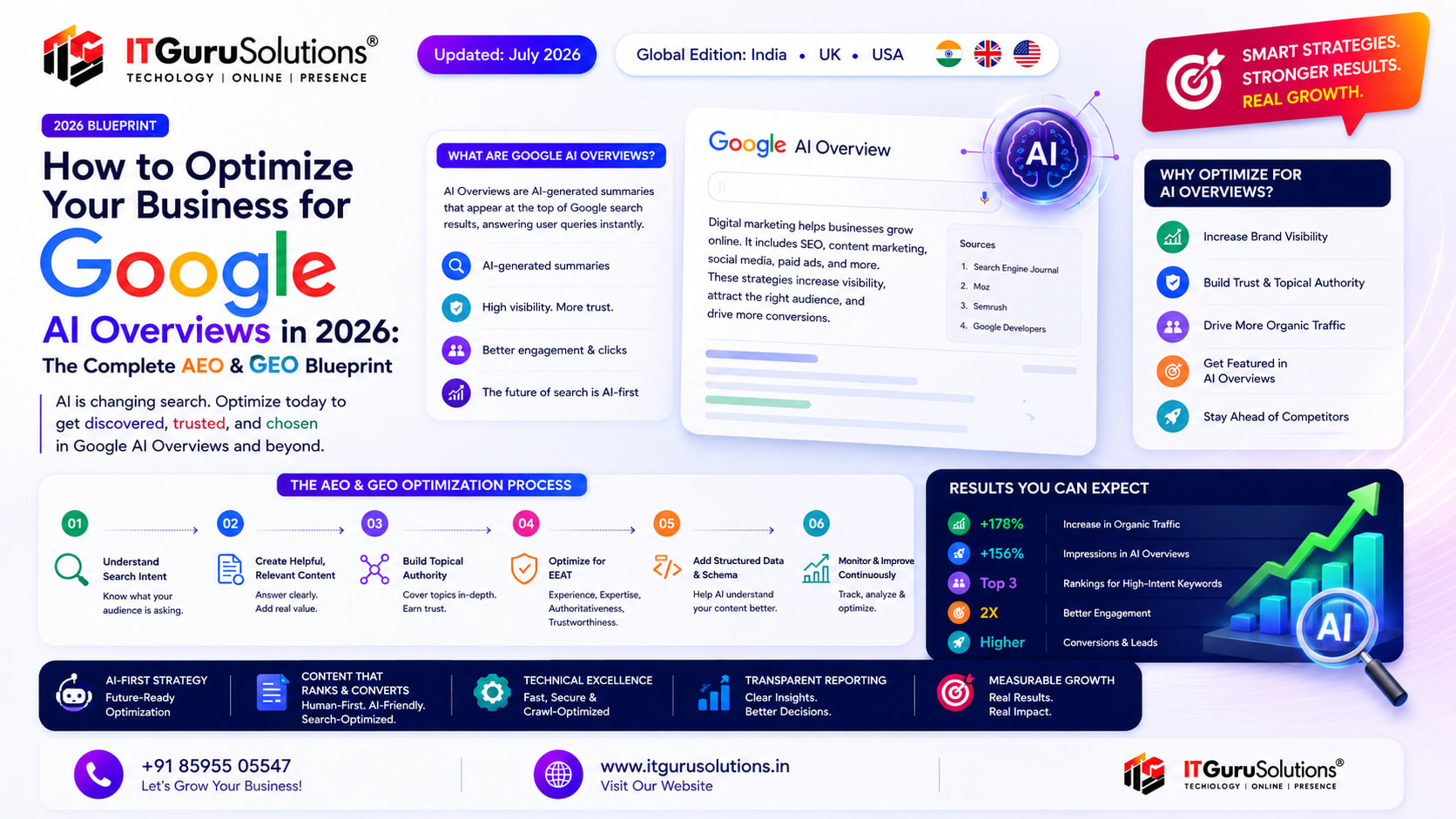
How to Optimize Your Business for Google AI Overviews in 2026: The Complete AEO and GEO Blueprint
Google AI Overviews now appear for a significant portion of commercial and informational searches. This complete AEO and GEO guide explains how the feature works, how it selects sources, and what service businesses in India must do in 2026 to remain visible and get cited.
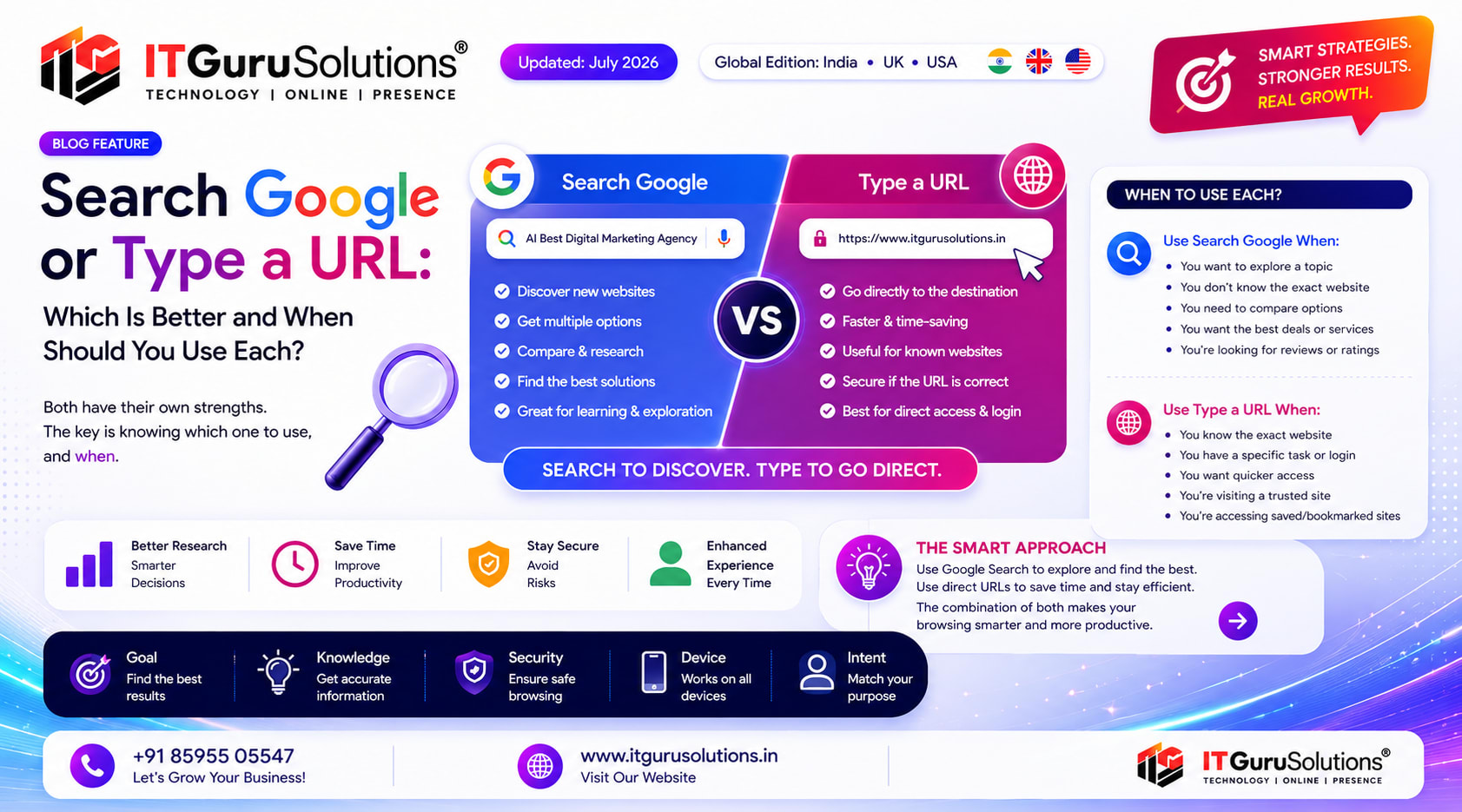
Search Google or Type a URL: Which Is Better and When Should You Use Each?
Confused whether to search Google or type a URL? Learn the real difference, when each method works best, and how to search smarter online.
Continue Reading
View allPrevious
Next.js vs. WordPress in 2026: Which is Better for SEO & Speed? | IT Guru Solutions
Compare Next.js and WordPress for SEO, speed, security, and scalability. Learn which platform best supports long-term business growth in 2026.
Next
AI Search Optimization in 2026 : Complete Guide to ChatGPT, Google AI Overviews, Gemini & Perplexity
Learn AI Search Optimization with practical strategies for Google AI Overviews, ChatGPT, Gemini, AEO, GEO, Semantic SEO, and Entity SEO.
Ready to implement these strategies?
Our team at IT Guru Solutions can help you achieve your goals with expert guidance.