Discover why enterprise brands leave meta keywords blank, how search algorithms deprecated legacy metadata, and what Schema.org and semantic SEO use today.
Anyone inspecting the HTML source code of Fortune 500 companies, global tech leaders, or high-ranking digital publications will notice a consistent pattern. The keyword meta tag either appears completely blank or is absent from the document head. Understanding why this happens requires exploring how search technology evolved from crude text frequency matching in the 1990s into modern semantic intelligence.
The Genesis of Search Engines and the Era of On-Page Metadata
During the early days of the World Wide Web in the 1990s, search engines faced a massive computational challenge. Early indexing engines such as AltaVista, Lycos, Infoseek, and Excite lacked the computing infrastructure and algorithmic maturity to autonomously analyze the full topical meaning of a webpage. Instead, they relied almost entirely on self-reported metadata provided by webmasters.
The World Wide Web Consortium established the meta element to represent document metadata, with the name keywords attribute specifically designated for authors to provide relevant topic tokens. In this primitive search environment, website creators could directly dictate their search rankings by packing the tag with target phrases. Because these engines evaluated web pages based on internal keyword frequency rather than external validation, the meta keywords tag became the single most manipulated element on the web.
The Rise of Keyword Stuffing and Search Manipulation
As commercial internet traffic surged, the vulnerability of self-reported metadata became obvious. Webmasters began packing hundreds of irrelevant, high-volume search queries into the hidden document head. A website selling industrial supplies might insert celebrity names, trending news topics, and competitor brand terms solely to siphon search traffic.
Because the meta keywords tag resided inside the document head, it remained completely invisible to human visitors browsing the page while staying fully visible to search engine spiders. This invisibility created an era of rampant manipulation that degraded search result quality, forcing search engine engineers to rethink how digital relevance was measured.
The Algorithmic Shift: PageRank and External Validation
The decisive turning point in search engine history arrived in 1998 with the introduction of Google and the PageRank algorithm developed by Larry Page and Sergey Brin. PageRank introduced external validation to search. Rather than trusting what a webmaster claimed a page was about through hidden tags, Google analyzed the hyperlink structure of the web, treating incoming links from reputable websites as objective votes of confidence.
By shifting focus from unverified internal metadata to external consensus and link equity, Google delivered substantially cleaner search results. This technological leap rendered the meta keywords tag obsolete as a primary ranking signal.
Google Deprecation and Global Search Consensus in 2026
In September 2009, Google officially confirmed what technical practitioners had observed for years. Google Webspam team lead Matt Cutts announced that Google core web search algorithms completely ignore the keywords meta tag. Google engineers stripped the tag of all algorithmic weight because of its persistent history of abuse.
In 2012, Google briefly tested a news keywords tag to help disambiguate topics in Google News reporting, but retired that tag by 2018 after Natural Language Processing systems proved capable of understanding news topics without manual hints. Today, every major search engine treats the tag with indifference or active suspicion.
Bing Spam Trap Mechanism: Why Populating the Tag Carries Risk
Microsoft Bing takes an aggressive stance toward the keyword meta tag. While Google simply ignores the tag, Bing crawlers analyze populated meta keywords to identify search manipulation. If Bing detects a divergence between the keywords listed in the HTML head and the actual visible text on the page, the crawler flags the domain for deceptive optimization practices.
This reality creates a significant risk imbalance. There is zero benefit in Google, yet a substantial penalty risk on Bing. Leaving the tag blank or removing it entirely is the only logical technical choice.
Legal Liabilities and Trademark Infringement Precedents
Beyond algorithmic penalties, corporate legal mandates played a massive role in eliminating meta keywords. In the landmark legal case Brookfield Communications versus West Coast Entertainment in 1999, the United States Court of Appeals for the Ninth Circuit established the doctrine of initial interest confusion on the internet.
West Coast Entertainment had placed the trademarked term MovieBuff into its hidden HTML meta keywords to divert search traffic from Brookfield searchable entertainment software. The federal court ruled that using competitor trademarks in hidden metadata constitutes trademark infringement under the Lanham Act. To avoid catastrophic legal exposure, enterprise compliance teams worldwide enacted strict policies prohibiting marketing teams from inserting third-party terms into metadata fields.
Enterprise CMS Architecture and the Blank Output Phenomenon
When reviewing enterprise websites built on WordPress, Magento, Adobe Experience Manager, or custom PHP frameworks, developers often wonder why the tag remains in the code as an empty string. This happens because modern Content Management Systems dynamically generate HTML headers using template scripts.
When a CMS template executes code designed to output meta keyword variables, but the database field contains no data, the template prints an empty string attribute. Furthermore, major optimization plugins like Yoast SEO permanently eliminated the meta keyword input field from their user interfaces, leaving millions of legacy theme files connected to empty database queries. Empirical data from the HTTP Archive Web Almanac demonstrates that modern web development is systematically stripping legacy header clutter to ensure clean parsing of canonical and robots tags.
The Modern Replacements: Open Graph, Data Layers, and Schema JSON LD
The retirement of meta keywords did not eliminate the need for metadata. Instead, it led to the creation of three specialized, transparent protocols:
- Open Graph Protocol: Used by social networks like LinkedIn, Facebook, and messaging apps to generate rich visual link previews with high conversion click rates.
- JavaScript Data Layers: Implemented in enterprise analytics and tag management systems to pass secure user interaction data without polluting HTML markup.
- Schema.org Structured Data: Standardized JSON LD linked data that explicitly communicates business entities, services, articles, pricing, and FAQs directly to search engine knowledge graphs.
The AI Revolution: Natural Language Processing and Generative Search
The transition from lexical keyword matching to semantic meaning represents the ultimate evolution of search. Advanced NLP models such as BERT, RankBrain, and Gemini analyze the contextual relationships between words, recognizing real-world entities rather than isolated text strings.
With the rise of Generative Engine Optimization and AI crawlers like GPTBot, ClaudeBot, and PerplexityBot, search systems extract direct factual answers from visible headings and structured markup. Modern businesses achieve organic dominance by investing in comprehensive technical SEO services, robust custom web development, and high-quality content strategy rather than outdated metadata tricks.
Key Takeaways
- The Genesis of Search Engines and the Era of On-Page Metadata
- The Rise of Keyword Stuffing and Search Manipulation
- The Algorithmic Shift: PageRank and External Validation
- Google Deprecation and Global Search Consensus in 2026
Frequently Asked Questions
- Why do enterprise brand websites show empty meta keyword tags?
- Enterprise websites display empty keyword tags because their CMS templates still execute legacy header code, while their content teams intentionally leave database keyword fields empty to avoid spam penalties and legal trademark risks.
- Does Google use meta keywords for ranking in 2026?
- No. Google officially deprecated the keywords meta tag in 2009 and completely ignores it during crawling, indexing, and ranking calculations across all search verticals.
- What should you use instead of meta keywords?
- Webmasters should use Schema.org structured data in JSON LD format, accurate title and meta description tags, and semantic HTML headings that clearly define topic entities for search engines and AI models.
- Can having old meta keywords hurt search rankings on Bing?
- Yes. Microsoft Bing uses meta keywords as a spam evaluation signal. If the keywords in the tag mismatch the visible page content, the crawler flags the page for manipulative behavior.
About Sahina Parveen
Sahina Parveen contributes SEO insights for IT Guru Solutions, a Delhi NCR company founded in 2020 with Full-Stack Builds projects delivered and clients in Global Delivery countries.
Read Next
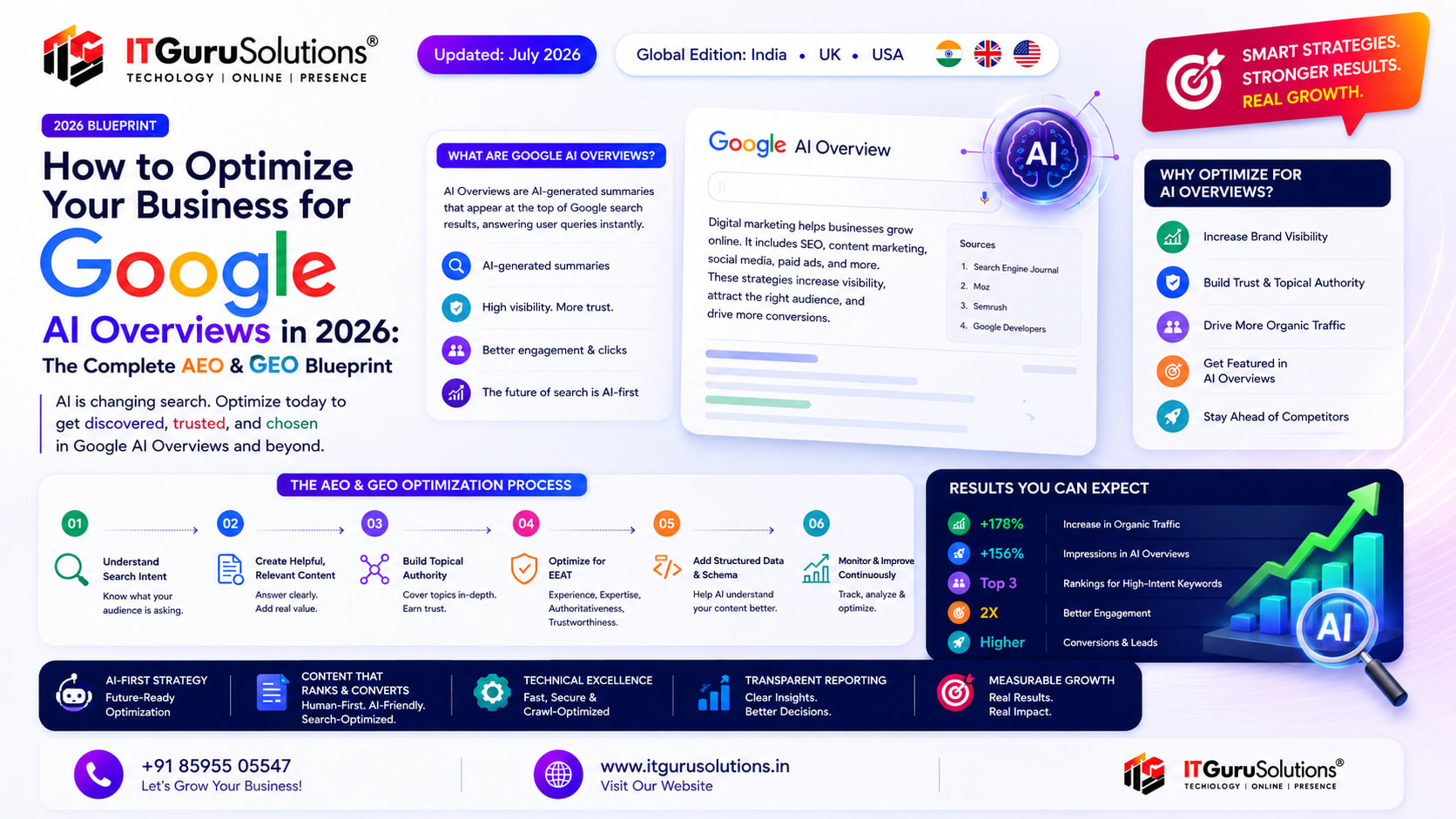
How to Optimize Your Business for Google AI Overviews in 2026: The Complete AEO and GEO Blueprint
Google AI Overviews now appear for a significant portion of commercial and informational searches. This complete AEO and GEO guide explains how the feature works, how it selects sources, and what service businesses in India must do in 2026 to remain visible and get cited.
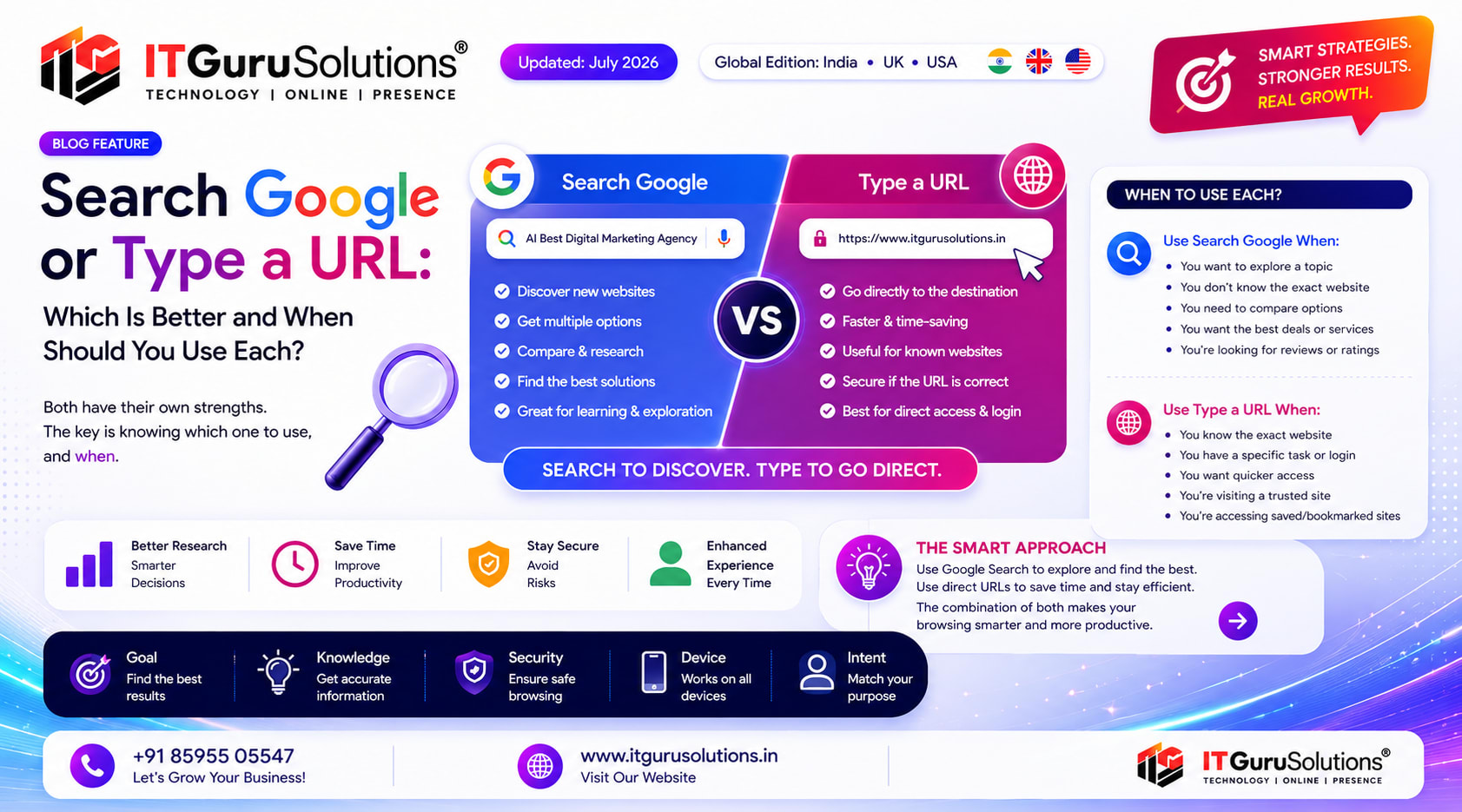
Search Google or Type a URL: Which Is Better and When Should You Use Each?
Confused whether to search Google or type a URL? Learn the real difference, when each method works best, and how to search smarter online.
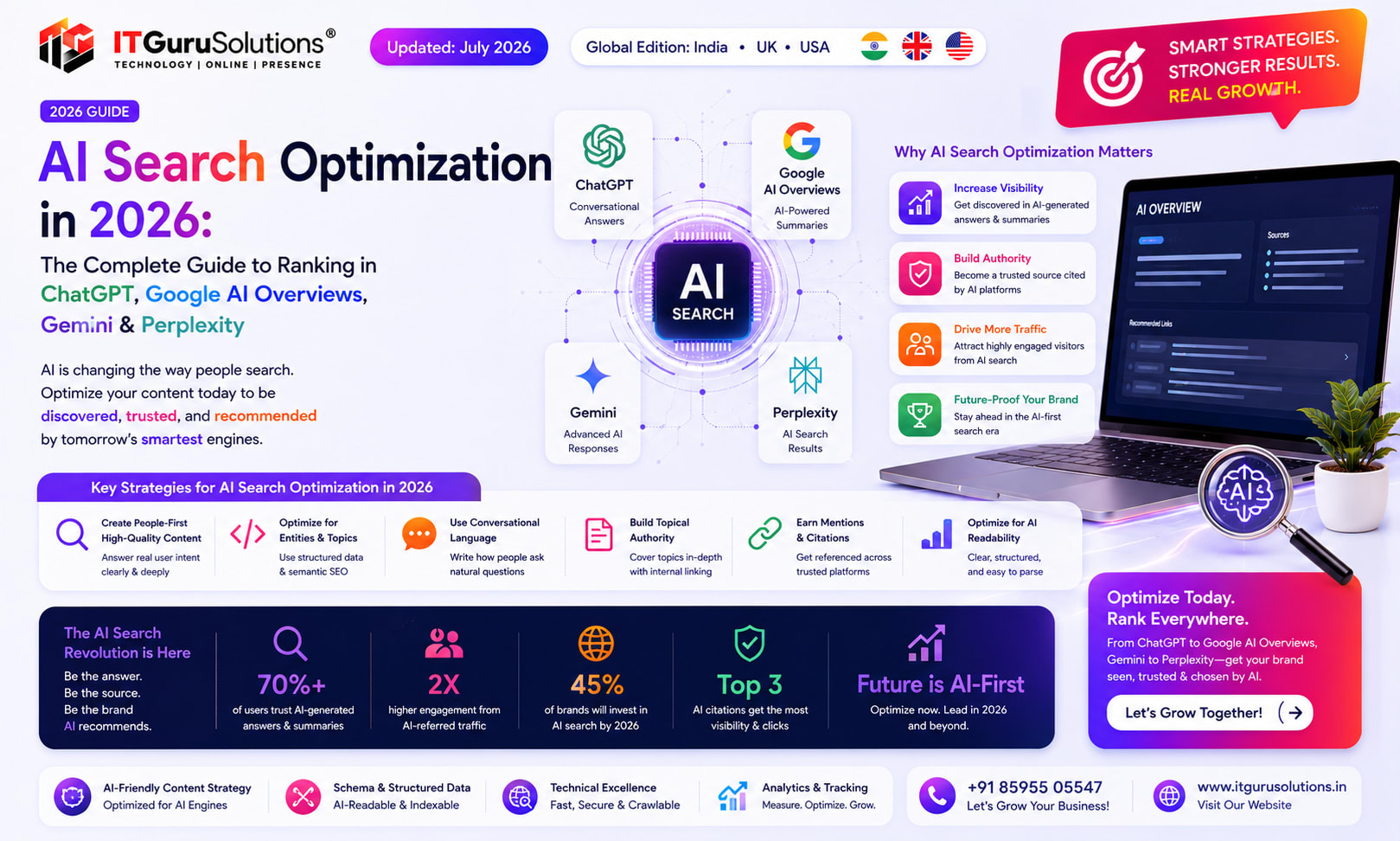
AI Search Optimization in 2026 : Complete Guide to ChatGPT, Google AI Overviews, Gemini & Perplexity
Learn AI Search Optimization with practical strategies for Google AI Overviews, ChatGPT, Gemini, AEO, GEO, Semantic SEO, and Entity SEO.
Continue Reading
View allPrevious
How Much Does Mobile App Development Cost in India in 2026? iOS, Android and React Native Pricing Guide
Mobile app development in India ranges from Rs 2.5 lakh for a simple utility to Rs 45 lakh plus for a full-featured marketplace. This pricing guide breaks down real costs for iOS, Android, and cross-platform builds.
Next
How Much Does Web Development Cost in India? 2026 Pricing Guide
Comprehensive guide to web development costs in India. Compare pricing for custom websites, e-commerce, and web applications. Expert insights from Delhi NCR.
Ready to implement these strategies?
Our team at IT Guru Solutions can help you achieve your goals with expert guidance.